Showing posts with label Verbal Diarrhoea. Show all posts

Sunday, 31 December 2017

2017 Retrospective

It's been...an year.

I don't think I regret any of it, not really. I've worked to improve myself. I finally learned how to touch-type (still working on my speed, and the numbers row still gives me pause, but I can now type without looking). I joined Khan Academy, and started learning all the mathematics and economics I always wanted to know, but could never quite comprehend. I started writing again. I touched a horseshoe crab.

There have been hard lessons as well. Humility is not something I used to have in very great quantities. Paradoxically, neither was confidence. I like to think that I've been working on both, gradually. I know I'm a better person than I use to be. I also know that there's room for improvement. I do want to be a good person. I've never intentionally tried to be cruel, but...people are judged by their actions, not their thoughts. The current me looks back, and knows that I have acted cruelly.

There is no true purpose to life, I don't think. Life exists because it can replicate. Sentience exists because it can manifest within a replicable body. But a sentient mind is capable of giving itself a purpose; anecdotal evidence suggests that a purpose drives it to function better. I think, for my purpose, I would like to improve myself, and perhaps even bring some measure of happiness to others, if I can. A resolution for the New Year.

Goodbye, 2017.

Sunday, 27 March 2016

Excess

Last year, through a combination of stress, stress-eating and a hitherto unsuspected food addiction, I gained 10 kilograms over the space of nine months, catapulting me into the "obese" category. This year, I tried to shed them.

I had tried to address my weight in the past, but it never really stuck. I think it was partially because food consumption was a major coping mechanism for me (see "food addiction" above), and the more out-of-control my physique became, the more ashamed and helpless I felt about it. Also unhelpful were the comments from friends urging me to eat more, suggesting that I eat something highly fattening "just this once", or who told me that I shouldn't call myself overweight. Perhaps they meant well, but they eroded away at my resolve, made it harder to control my diet, made me question if I was doing the right thing.

And then there were the worst, the very worst, the allegedly good, supportive friends who fat-shamed me to my face. Perhaps they thought they were being helpful, that the blunt criticism was expected of a close friend, but all they did was make me feel defensive, inadequate, a failure. 

On reflection, perhaps the sort of attitude I desired from my friends was silence. In my own (accurate) estimation, I was unhealthy. I didn't want it pointed out to me, but I didn't want an excuse not to deal with it, either.

My father - who has long been my rock - gave me the key to pushing my weight down. He suggested that I record my weight daily. Of my own accord, I also started recording what exercises I had done that day. And somehow, somehow that worked. The mere fact that I was accountable - that I would have to admit, even if to no-one but myself, that I skipped exercise or stopped losing weight - gave me control, and the will to reduce my weight. I began to monitor my caloric intake, calculating how much I could have per day, how much was in my food, which put me even more in control. Granted, focusing on calories alone is a bad idea - if one plans on fulfilling ones' caloric requirements solely through consumption of, say, pure unsalted butter, a very unhappy future awaits - but the mere fact that I was paying attention to the contents of my food was significant. I learned which foods were high in calories, which foods were extremely high in calories, which foods appeared healthy but were in fact extremely energy-rich, and which foods would fill me up without a major nutritional contribution. I reduced my sugar intake, and got used to the taste. (I took aspartame only occasionally - I'm not a huge fan of the odd, synthetic flavour.)

I did make sure I had a balanced diet. I had long gotten over my childhood dislike of vegetables, and I could eat a lot of them without going over my caloric restrictions. I rotated between different protein sources each week - chicken, fish, beef, tofu. I had a daily chocolate ration - chocolate is extremely rich in iron, which justified the intake - and I allowed myself dessert, either modified to be low-fat or in small portions. I ate four times a day, at roughly four-hour intervals, but would skip or reduce a meal if a previous one had been heavier than usual. I made sure that my weight-loss was gradual, about 0.5 to 1.0 kg a week.

And, well - it's working. I've lost ten kilograms over the course of three months. I've been exercising every day. My body looks better, and feels better. I used to have food cravings all the time, but now I rarely get them.

And I'm shocked at how much less I'm consuming. How much my grocery bill has gone down, how little I really need in order to survive. There had been so much excess. So, so much excess, and it was making me miserable.

It's not over yet. I wasn't exactly a healthy weight to begin with, last year, so there is still some distance to go. I still have to deal with lack of support from others, from people asking to meet up at fast-food restaurants or otherwise pushing unhealthy food on me. But I'm not helpless anymore. I know what to do, I know how to lose weight, and for the first time in years I'm not ashamed of my own body.

I disapprove of fat-shaming. I was on the receiving end of it, and it had a horrible effect on me. But I think that anyone who suspects they might be unhealthy - not overweight, because it is possible to be weight a lot while being perfectly fit, and BMI can be extremely misleading, but unhealthy - should try and do something about it. It can be difficult to find out what works, since health is such a terribly individual thing, but I think it is worth the effort.

Sunday, 8 November 2015

Culture, Cuisine and the Occult

Aww man, it's already November, where did the year go? Also, apparently I've only posted here five times previously this year, this is a new low.

I watched The Martian in the cinema shortly after it came out. It was a thoroughly brilliant and enjoyable film. I don't think 3D viewing added much (I have yet to view a film where it did), but it was not terribly distracting, either. I am also stupidly proud to have known of Andy Weir before he became famous (I have been a longtime fan of Casey and Andy).

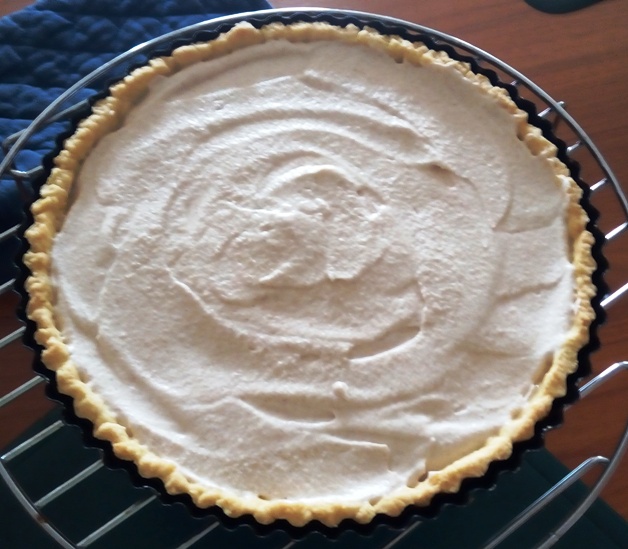
I think its slightly less meaningful to be stupidly proud of any Homestuck alumni, since Homestuck was a force of nature, but I do remember when Toby "Radiation" Fox was relatively nobody. If video games cannot be art, then what is Undertale? For example, without Undertale, this cinnamon butterscotch tart would not have existed.
(Recipe available here - all I changed was to cut the amount of whipped cream topping in half, and use sweet potato flour instead of cornstarch. Also, I suggest allowing the tart to sit in the refrigerator overnight before consuming.)

Contrastingly, spaghetti recipes (for that animate skeleton in your life) are not difficult to find, but this one for Tagliatelle al Ragu Bolognese is my favourite.

Overall, this has been a good year for independent artists. Scott Cawthorn's Five Night's at Freddy's survival horror series, which I have been following vicariously through Let's Plays since I am a huge coward, will be getting a film adaptation from Warner Bros. Pictures. I'm ...not sure if I will overcome my fear long enough to watch the film. Or even the trailer. I enjoy horror prose, as embodied by the SCP Foundation, but visual elements are...harder to ignore.

On the subject of prose, I recently came across the satirical works of Saki, which are freely available via Project Gutenberg. The style rather reminds me of Jane Austen's, but with a mostly masculine viewpoint and greater usage of biting social commentary. Saki's heroes are witty and intelligent, contrasting with their dull, greedy, self-centered antagonists, although over-cleverness is not rewarded either.

My recent readings have included Charles Stross's works. I loved the Laundry Series from about a page into the The Concrete Jungle. The protagonist works for "The Laundry", an organisation very much like the SCP Foundation in function and scope, but with a distinctly British flavour to contrast with the Foundation's faintly North American air. The stories read like detective fiction, in which the protagonist has to figure out what new supernatural creature is involved in the latest case and how to defeat the creature, and any humans who might be assisting it. However, the sheer delight of these stories is how the paranormal is described in terms which allows it to fit into the known scientific world. Equoid is particularly wonderful in this regard. (Note that Equoid is mildly unsafe for work, and very much unsafe for sleep if read immediately prior.) The novella's explanation for the appearance and behaviour of a certain mythical being is fleshed out with gradual, creeping horror, small details inexorably building a final, sickening picture. At the tale's conclusion, I felt both ill and enlightened.

Returning to video games, I think A Very Long Rope to the Top of the Sky is another strong contender for the video-games-can-be-art argument. It's a thoughtful game, deconstructing some video game tropes while playing into some others. It's also, frankly, underrated. Perhaps the long title, somewhat subpar graphics and plodding pace put off some players. It is a long game, and it takes a while for its true brilliance to be apparent, but it is very much worth playing until the end.

This was another edited stream-of-consciousness post. It's almost the only type of post I write. Also, I'm not good at closing paragraphs, possibly for the same reason. My mind certainly doesn't stop, not just yet, so how should this prose end?

Sunday, 22 February 2015

Hey, 'Sup

It's been a while...again.

I have legitimate reasons, I really do. Wrapping up the thesis, getting a job, doing the necessary shopping and whatnot for said job... There's honestly a lot to do, moreso when abovementioned job actually starts. 

It's a strange thing, responsibility. It's easier to be lazy, but being hardworking feels good. 

On the subject of hardworking (or lack thereof), I haven't been adding much to this blog, even though I actually have several new recipes. However, Pi Day swiftly approaches, and I would rather not miss it. There is something to say for tradition, after all. Extremely modern tradition.

I notice I don't talk about myself much, not really. My love of sharks is obvious, as is my general love of LEGO and particular love of Bionicle, but I only touched on Doctor Who briefly, Cracked.com is mentioned occasionally, and I've never mentioned the manga I read, or the few television shows I follow (well, one, really), or the books I enjoy. I'm a rather private person, which is a strange thing to say on a blog on the Internet, but there you go.

Hmm, this post was almost a stream of consciousness. Shall we call it an edited stream of consciousness? We shall.

Friday, 17 May 2013

On Growing Up

Apparently, the ultimate adult is calm, rational and intelligent. The Ultimate Adult, we may emphasise, is always right. Not by virtue of knowing everything - no one can - but by being able to admit when they are wrong. Morally right, if you like. The Ultimate Adult does not lose their temper, does not hurt the feelings of others, is never caught out not knowing what to do.

We strive, all our lives, to this ideal. "Grow up!" is a common admonishment. "Childish" is an insult. Our favourite superheroes rescue the helpless - clearly, being one of the helpless is an undesirable state, we would rather be the superhero. 

But, you know, I think part of growing up is realising that hardly anyone so much as approaches the ideal of the Ultimate Adult. One need not look far to find instances of legal adults - as determined by age and ability to contribute economically, politically and socially - exhibiting typical "childish" behaviours. Even the accumulation of knowledge is not guaranteed with age. Ignorance, sometimes shocking quantities of it, is prevalent even among those who have had both the time and the opportunities to know better.

Do "adults" really exist? Or is everyone frightened, lost and fumbling on the inside, while putting up a collected appearance on the outside? Is this whole business of the Ultimate Adult just a complex game of one-upmanship?

I can speak for myself, that I don't feel like an adult. I'm old enough to decide on national issues, operate mobile mechanical deathtraps, and purchase orally-ingested mind-altering chemicals. I have an income, I pay rent and taxes, I plan and cook my own meals. If I fall ill, have to apply for a visa, have to apply for anything - I handle it, all by myself. I have to teach people who know less than myself. I am personally in charge of work which could cost my boss a lot of money, if something went wrong. I have responsibilities

And I'm still such a child on the inside. I'm frequently frightened, often lost, often helpless, often  anything but calm and level-headed. I'm silent at the wrong time and speak when I shouldn't.

They don't give you a handbook, about being an adult, but maybe there's nobody to write one.

Saturday, 8 December 2012

2013 is at the Door

So, I'm coming home soon! I didn't expect to be so casual about it, but I suppose I'm getting used to it. This time, when I asked my mother what she'd like me to bring back, there was no polite waffling about. She had a list.

I've been getting started on my Christmas shopping. At one point I was in the ABC Shop, a Very Dangerous Place, all the DVD box sets for various favourite shows lined up, price tags cunningly hidden on the back. I resolutely turned away - and immediately locked eyes on the Doctor Who shelves. The ones with the price tags proudly displayed on the front, because the DVD sets were discounted to less than two-thirds of the regular price. 

It was a well-planned ambush. I picked up Season 2 of the new series, justifying it as a Christmas present to myself, because it contained my very favourite episodes which I was sure to re-watch over and over again, and in no way was a squandering of hard-earned cash on frivolities. As I conveyed my new property towards the cashier, I turned back briefly to Season 1 and said - not out loud, that would be weird - I said, "I'll be back for you." Yes, The End of the World and Dalek would be mine. They would be mine someday, to rewind over every single frame, but for now I would bide my time.

Incidentally, the cashier was so not helpful. "You got a real bargain there, luv!" she exclaimed, as she scanned the barcode. "Wouldn't you like to get the rest of them? Bit rare, for the price to be down this much."

I got it home and watched everything. Twice. (For the commentary, you see.)

So anyway! People have been asking me for wishlists. I find wishlists to be rather troublesome things these days, honestly. After that awful Christmas which I spent by myself, even the mere company of those I love has become a blessing. It's hard to write a wishlist, because if I list the things I'd like to have, it would be endless, while the list of things I need is empty.

I do acknowledge that wishlists are useful for gauging the sort of things a person likes. Preferences change after all - last Christmas, my brother fancied the gift I got for my mother (Planet Earth, narrated by David Attenborough) and largely ignored what I had picked out specially for him. If that is the case, perhaps a list of my preferences would be more helpful?

I like blue, green and burgundy, and I prefer silver to gold. I eschew most cosmetics, but I like perfume and nail polish. I like cookies and scones and bread and cakes, and I like making them. I love both tea and coffee, but especially tea. I like sharks - oh come on, that's obvious. I like spiders, and badgers, and elephants and parrots and dinosaurs. Cats are alright, I guess. I like robots of various types. I like science fiction. As you can see from some previous paragraphs, I acquired a fondness for Doctor Who, particularly David Tennant's tenure. Actually, I'm inclined to watch anything with Mr. Tennant in it, even if they are otherwise contrary to my tastes. The same goes for Stephen Fry - gosh, have I mentioned that I love QI? I do, I really do! It's like the most interesting trivia contest in the world!

I'm a huge nerd! I love my bacteria! I love the periodic table! I love π, I love φ, Pythagoras' theorem, the elegance of DNA replication, Occam's razor, the oceans, the sky when it's about to rain, Mount Fuji, skyscrapers, suspension bridges, the Moon, the whole world and all its sights and sounds, boomdeyada boomdeyada!

Sorry, got carried away there.

See, this is why I can't write wishlists.

Sunday, 8 April 2012

Science and Creepiness

I have mentioned the SCP Foundation before, and perhaps hinted as to how much I adore the series. It is only recently, however, that I have begun to understand why made-up reports about fictitious entities, contained by an equally-fictitious organisation, have such a draw for me. It's because of when I sit down to write a report about my lab-work, or plan an experiment, I could just as easily be writing about a SCP object.

I wouldn't say all researchers in all scientific disciplines could say this, but in my case, working with infectious disease, it certainly applies. We have physical containment levels for what we work on. There are often special requirements for different organisms, pertaining to handling, containment and maintenance. While there is usually enough information to culture the organism, and prevent it or modified strains from escaping into the environment, there is frequently a lot which is not known. That, of course, is the reason for experimentation.

We often have to do things we would rather not in order to find answers. I have infected and then killed several mice in the course of my experimentation. Did I enjoy it? Of course not. But it had to be done - there's that ugly phrase again - for the greater good. It's not on the level of utilising Class D personnel, or any sort of human experimentation for that matter, but it is still unpleasant, and often difficult to morally justify.

There are always the nasty surprises - the person who breaks a flask of infectious bacteria and acquires the corresponding disease shortly afterward, the person who ends up in a room with a leaking nitrogen dewar and suffocates before they know it - all the times when a mistake was made during the most unfavourable circumstances. There are incident reports, and they are every bit as impersonal as the artificial ones in the Foundation's collection.

Perhaps most pertinently, these organisms can be utterly terrifying. Look up bacillary dysentery, or meningococcal disease, or gas gangrene. These are real-life horrors.

In handling a pathogenic organism almost every day, when the precautionary measures are known by heart, it all becomes routine. When it becomes routine, one stops imagining the worst that could happen. Why imagine, when the worst has never happened, and when paranoia leads to a waste of resources?

Horror fiction on the other hand, makes it a point to explore the worst that could happen, in the process exposing the fallacy of considering a dangerous object, which hadn't done anything harmful yet, to warrant no more caution than a harmless object. When I mentally wrote out a SCP entry for the bacterium I work on, and realised it would qualify for Euclid class, it was a shock. Had I truly become so familiar with a dangerous, dangerous pathogen, that I no longer considered it threatening? Did I really think that it could not have any nasty surprises hiding up its prokaryotic sleeves, even there are many things about it which are poorly understood? Was I so really so arrogant, that I no longer feared a bacterium which causes an often fatal disease?

The entries in the SCP series are written to be entertaining, which is why their properties are so exaggerated. It's understandable, that the more dangerous objects have to have such bizarre, obviously undesirable effects in order to be accessible to a lay audience. But if you think about it, a bacterium like, for example, Clostridium tetani doesn't need to liquefy a patient's insides or cause projectile haemorrhaging. It's already frightening for what it does naturally

The SCP Foundation showcases the creative fiction of some excellent writers. Are we really so arrogant as to think that Nature can't possibly be more creative?

Wednesday, 21 December 2011

Endings

Somehow, the end of the year feels like the end of the year. It's probably just my sentimentality talking, since here in the Southern Hemisphere summer's just starting, and if anything, summer is a middle, not a beginning or end. But the year is winding down, and I find myself running through memories - both happy and sad - and feeling a little wistful.

Today our lab had our Christmas gathering, complete with a lot of food and the customary Stealing of Presents. I can't believe it's been a year since the last one. How many people have left? How much has changed? Our gathering was in the exact same room as the last time, but this time I sat on the opposite side of the table. It's the littlest things.

Every year, my co-supervisor tells the story of the one PhD student who went home for the holidays and never came back. There's a portrait of her in the lab, on one of the high shelves. Every year we are entreated to be careful, and please come back in the new year. Every year I shiver, afraid it might be my turn, and it's not so much the fear of dying as the fear of letting everyone down.

Endings, endings, endings. My last day in the lab today, tomorrow I head off with a bag in hand and another on my back. Adventure and homecoming all at once, and did you know that home can be more than one place?

We deal. We always deal. But now, with the afternoon light shining bright over the buildings (home) and through the leaves, there's an ache in my heart.

Sunday, 16 October 2011

Warmth

Winter is an easier time to deal with. If you're cold, you bundle up. If you're still cold, you bundle up more. When it's hot, on the other hand, there's a limit to how much you can take off, and you have to strike a balance between removing stifling clothing and covering your skin from the harsh sun.

That said, there is something to be said about the brightness of the sun, and how it casts blocks of colour intercut with hard shadows, and how clear the sky looks, and the sparkle of leaves as they filter the brilliance of a sunset.

There is something to be said for the touch of radiating heat, intermittently caressed away by the light breeze; of the crispness of the grass and the firmness of the earth; of how different everything smells on a beautiful day.

There's something to be said for feeling hope and peace for no other reason than the sun is shining.

Why does the sun make me feel this way? I don't know. There's nothing logical about this. This burning ball of hot gas certainly has no feelings for me, would kill me if I got too close, would take my sight if I looked it in the eye. Yet when I stand, face tilted to the sky, eyes closed against the brilliance, all feels right with the world. When I throw open the windows, my room feels bigger, brighter, almost thrumming with life, as if the rays are a conduit to the world outside the building.

No, I don't understand it.

But I can love it.

Saturday, 7 May 2011

A Tea Story

There are three things I have an excessive passion for, leading me to be very cautious around them, for fear that I will spend all my money on them without realising it. Markers, scarves and tea.

That I enjoy tea should not come as a surprise. My mother loved tea herself, and did her best to pass it down to her children. Although for me the love came late, when at the age of seven I realised that the only reason I disliked the taste of tea was the milk which everyone insisted on adding. Milk tends to block certain aromas, due to certain fats and proteins which make up the colloid. When I stopped adding milk to my tea, a whole range of delicate flavours suddenly appeared.

It got worse, of course, when I came to Australia and found that Twinings sold a range of different tea blends - and all in inoffensive little packs of ten. Suddenly, I was addicted. I had to try every flavour! Over a space of two years I gained new favourites. The calm Earl Grey. The intense, almost meaty Lapsang Souchong. The grape-like Darjeeling, the bright, fruity Lady Grey, the spicy Chai.

One tea which Twinings didn't carry in the little ten-packs was white tea. I also wasn't about to stay with Twinings forever, not when other brands had their own enticing blends. And thus my most recent acquisition is the White Tea with Rose Pods blend from Madame Flavour. It's a very mild tea with just a touch of rose, and is packaged in little silken infusion pods. Perhaps the best part, however, are the little personal notes on the side of the box, and the letter from Madame Flavour herself within the box. You feel that you're buying tea from a person, as opposed to a faceless factory. It helps that the tea really is very good.

The other tea I want to try is blooming tea. It would be interesting to learn how to make the tea balls. And what a lovely gift it would make.

Saturday, 9 April 2011

Patrons of Truth

"You don't use science to show that you're right, you use science to become right."

Scientific research is something of an idealistic profession. You're constantly testing your own observations of the reality around you, and you're always aware that you may have to re-evaluate your current explanation for any phenomena you may encounter. That means having an open mind, and while you must always be prepared to defend your own theories, you also have to be able to accept and account for conflicting observations from another person. In essence, you are never trying to prove yourself right, but rather trying to find out what the truth is, no matter how it may invert your beliefs.

Working in science as a job complicates things. Here, you are expected to produce results. Getting results does not necessarily mean accurately predicting the outcome of an experiment before doing it; it can also mean getting an unexpected result and then figuring out what it means, and then doing a second experiment to show that the revised theory is plausible. However, the whole figuring-out process is long and painful, taking shots in the dark, as it were, so most of us would like to be correct from the beginning.

That creates a lot of pressure to "get things to work." You have a theory that something should do something you expect, and so you spend months proving that it does, even while all your experiments methodically keep failing. And it is upsetting, because you have ownership over that theory - the need for it to be right, for you to prove it - although, technically, you should have no ownership. You are supposed to be impartially seeking the truth, and therefore should be prepared to discard unsupported theories.

But it is hard to be impartial when you are working for a salary, or when you are a student on a time-limit, and when you urgently need data to publish.

It is a tough thing to balance out. And once you've discovered something important, and have been acknowledged for it, it is even harder to accept conflicting evidence which may appear later. But you have to. As a scientist, you agree that seeking the reality of the truth matters more than receiving adulation over a lie.

If you don't, you aren't a scientist. You're an attention-seeker.

Monday, 28 March 2011

The Difficulty Factor

There's a reason a PhD is so highly valued. Well, it is a stepping stone to getting a better job, but the reason it can do that is because it is generally acknowledged that getting a post-doctoral degree is hard work. In Singapore you're more or less expected to aim for getting one straight after Masters, but in Australia they warn you off if they feel you are not ready. Many students choose to work a little or even travel around the world before they commence a PhD. It is considered a difficult, time-consuming thing to achieve.

What they don't tell you is why.

Before I started, I thought it was the technical difficulty. You are, after all, expected to produce results of a certain quality. For some courses you might publish papers which will make up chapters in your thesis, and that requires passing peer review from people who have been in the business longer than you have. There is also the time-limit, for scholarships are only offered for a certain period of time and continuing a PhD without funding is a difficult task.

However, this isn't really why a PhD is difficult to achieve. Skills can be learned with relative ease. After you figure out how to produce high-quality results, it's little trouble to continue doing so. And not everyone has to publish papers - it is possible to write a thesis based entirely on negative results and earn a pass.

The real difficulty comes from within. From you.

Why doesn't anyone warn you about the mental anguish? It is always made obvious that you yourself are responsible for your project, but it is not obvious that it translates to every mistake being on your own head. Your supervisors check in from time to time, but most of the time you are under your own power. The responsibility for completing a sufficient amount of work - the precise amount which constitutes "sufficient" is never made clear - is up to you, as is the method to achieving it. I can't define how stressful this is. It is not possible for someone who hasn't been there to understand.

I personally have become more emotional, more fragile since taking up this project. Minor details catch my eye, so paranoid am I. Failures feel like big losses, victories ignored because from experience, they are merely the prelude to even bigger disappointments. Sleep and food become expendable luxuries. Every bit of progress comes at the end of a huge fight. It feels as if I have to keep running to stay in the same place, trapped, unable to escape and unable to stop. I want to quit, so badly, except there's nowhere else to go.

And apparently, feeling this way is normal for a PhD student.

A doctorate is awarded to people who are apparently resistant to mental torture.

Friday, 18 March 2011

I Long for One Hour Ago

No, let's talk a bit more. I need to talk to someone, and the emptiness of the internet will do.

So. I get upset for relatively dumb reasons sometimes. Wasting time appears to be one of them. Impatience is my main flaw, so inefficient use of time bothers me greatly. Inefficient use of time includes:

  • Being late for a meeting
  • Talking in front of me and completely ignoring me, after inviting me to come and discuss an important matter with them
    • After already delaying the meeting on account of being late
    • Even though I had already waited an extra fifteen minutes for them to discuss other matters
    • Even though they called me in on the understanding that they were finished and ready to talk to me
  • Trying to discuss why I was upset during a meeting intended to be about work
    • After I repeatedly declined to discuss the matter
    • After I repeatedly attempted to steer the discussion towards relevant matters
    • Even though I had other things to do and wanted to wrap up the meeting quickly

And the worst thing? All of the considerations above were completely selfish on my part. I can see why I was upset, and I can't justify a single reason. These people are important to me. They weren't late on purpose, they had important things to do. The things they were talking about were important to them. Taking my feelings into consideration is part of their job. A better version of me would have understood. A better version of me would have accommodated them as they have accommodated me.

They should be nasty to me from now on. I deserve it. I don't even know how I will face them again, after what I said.

Anger is possibly the worst emotion.

Fear leads to anger. What have I been afraid of my whole life?

Being worthless, that's what. Hence the vendetta against wasting time. I'm afraid that if I don't fill every moment productively, people will quickly realise that I'm useless. I'm afraid if I make too many mistakes, I'll be abandoned by everyone who knows me. I'm afraid that if I don't keep pushing, the future won't happen. I'm afraid that if I don't push, and the future happens anyway, that means my presence was superfluous.

Such a dumb notion. My presence is superfluous. We all die in the end, caught in the endless cycle of birth and death, a cycle which is older than our species by several million years. The whole point of being human is finding meaning in spite of the pointlessness of the whole thing.

I'm looking for meaning in the wrong places. I only wish I knew where I should be looking.

I think that will be all. It was nice talking to you, internet.

Sunday, 13 February 2011

Stove Rules

I have a few rules for dealing with the kitchen stove, to make sure that I never set the house on fire, burn my housemates, etc. The rules are as follows:


  1. If leaving the house for any reason and for any expected duration, both stove and oven must be turned off. No exceptions.
  2. When cooking anything on the stove, I must remain in the kitchen at all times. This applies even if the power is off, as the stove is electric and retains heat for some time.
  3. Boiling milk must be watched with especial caution.
  4. If baking something in the oven, I must set a timer if I want to leave the kitchen. The oven light should also be turned on as a warning to others that it is hot. Leaving the house is not permitted.
  5. The heat on the stove should be set to the minimal level required (generally not more than medium heat). 

I've found that, with these personal rules in place, I've never had anything worse than the pot of spaghetti spilling over and hissing, and since I was always within earshot I could take care of it immediately.

What brought this on? Well, this morning, I found a kettle on the stove, with the heat up. The transparent lid of the kettle had no condensation; suspicious, I lifted the lid to check.

Bone dry.

This is, in fact, how many kitchen fires happen. The presence of water keeps the temperature of the pot at 100 degrees C, since at any higher temperature the water undergoes a change of state to steam, dissipating the latent heat. Once the water is all gone, the pot is able to reach a higher temperature, until some part of it, or even some leftover food residue, reaches its ignition temperature. 

Of course, it might not ignite at all. It might just sit there for hours getting hotter and hotter, until someone decides to touch the handle. Either way, it isn't safe.

I turned off the stove, of course, and warned my housemate as to what happened. She was very apologetic, and explained that she is quite forgetful over such matters. I left it at that.

This afternoon, I went to the kitchen and found the same kettle, steaming away unattended on the stove. There was at least some water inside, but it was only up to an inch in depth and rapidly diminishing. It was quite clear that this was what had happened the first time, only I caught it at an earlier stage.

This isn't the worst I've seen. A few years back, I was living with some different housemates, all boys. Sometimes I'd wake up early in the morning and find a very warm pot on the stove, empty and clearly left there from the previous night, the temperature control turned up to the highest heat level.

Do these people... not have any sense of safety? Have they done this a million times without consequence? Does the prospect of a fiery demise simply not bother them? Does the prospect of massive property damage and killing goodness-knows-how-many-others living in nearby apartments simply not bother them?

There was an article recently on BBC News, about car-manufacturing companies which were confident that they would be able to built a completely accident-proof vehicle someday. When I saw that article - when I had only gotten as far as the title - I laughed.

Nothing will be completely safe so long as irresponsibility exists in this world.

Tuesday, 25 January 2011

Update XXVIII: Food@Hawker Centre

It's surprising, the sort of things you can actually buy. Browsing a FairPrice Xpress outlet yielded bonito flakes (those delicious shavings used to garnish takoyaki and various other Japanese dishes), and starch balls which are most commonly found in bubble tea. Now that I think about it, takoyaki and bubble tea stall owners obviously get their ingredients from somewhere, but the general unavailability of these food preparations in the average grocery store makes them seem a little, well, magical.

And people wonder that while I subscribe to the traditionally feminine pursuit of shopping, my favoured retail therapy grounds are generally supermarkets. (I also like discount stores - there are always the strangest things.)

For most of the time I was home today (I also spent some time outside in the company of friends - even loners get lonely), I was at the center of a web, communication passing to me and from me and occasionally through me. I think I can honestly say that I have never sent so many emails in a single day. The heads of my lab would laugh, this must be business of usual for them, but for an underling like myself, such activity is rare. Usually I have, at most, two emails which require a response. Taking the position of some sort of operator is a strange, powerful feeling.

It is for this reason that I think I would enjoy being a secretary.

Lest I forget again, there is a very firm reason that I limit my consumption of ice kachang. Consuming the equivalent of a block of ice leaves one as equally cold as a person who just consumed a block of ice. Very, very cold. Air-conditioned food courts only make things worse.

On the subject of food courts, it occurs to me how superior they can be to restaurants. Cheaper, a wider variety of cuisines to choose from, and many of the newer ones are almost on par with a restaurant anyway. Take the Food Opera@ION Orchard (the at-sign modernhipcool thing is horrible why is it everywhere now). Excellent roti prata, even better fish curry, best Iced Milo made by a drinks stall, extremely reasonable price you'd have to go to Serangoon Road to match, elegant wooden furniture and decorative elements on the walls such that you can hardly believe you're eating in what amounts to a hawker centre. Robinsons doesn't give nearly as nice carrier bags as the ones they place your take-out in. And many of the newer shopping malls have comparable standards.

313@Somerset (the at-sign again why) also has a waitress who goes around in a Segway. Yes, around the food court. No, I don't know what she does that requires riding a Segway. Hopefully not delivery of drinks.

To change the subject completely, I have a new computer. My new personal assistant is a ThinkPad Edge, in sleek silver and glossy red. He's a last-season's Lenovo, but I have every confidence that he will handle the tasks I assign him, especially now that I engage in less gaming than I used to. He weighs a very portable 1.6 kg. His name is Magellan.

All I need is that (expensive!) laptop support I saw at IKEA, and my computing life will be complete.

This post has no point. But with this much verbosity, who needs Twitter?

Wednesday, 19 January 2011

Confirmation

... of Candidature. I just got an email telling me who my panel members are, and asking me to arrange a time to have a meeting with them, to decide if I'm fit to continue as a PhD student. Oral presentations and fierce questioning will be involved.

So my father just read in the newspaper that students tend to do better in exams if they've taken 10 minutes beforehand to write down all their worries on paper. Having articulated their concerns, they either realise how frivolous they are, or are able to prepare themselves to meet the challenge head-on. As the confirmation of candidature is a sort of exam for me, I'll have to try this out.

Of course I'm trying to distract myself from the terror of preparing for this thing. What do you think?

It doesn't help that my main supervisor, who will inevitably be on the panel, has THAT FACE. The one which convinces you that he doesn't approve of a word you are saying. He claims that he's just thinking and his face automatically does that without his knowledge, but given that he regularly tells fairly bad presenters that they've done a good job, I don't know if I should believe him.

What the heck. This isn't going to happen anytime soon. Time for thoughts of chicken rice and roti prata!

Friday, 31 December 2010

MMX

Google's latest doodle informs me that it is the eve of "MMXI". Per tradition, it is time for some reflection.

Last year, I wrote a satirical obituary to 2009, which I noted was a truly special year. In that entry, I failed to note why I considered it special.

2009 was a turning point for a number of reasons. It was the year I did my Honours, where I more or less stopped being a student in the traditional sense and started on the path to becoming a serious researcher. For the first time, I started associating, on a regular basis, with people who dabbled in science for a living. I made close friends. I found what it was like to be respected, important.

By 2010, I had realised that those new friendships were a lie, that I wasn't important at all, that the respect of others was not as important as the respect I gave myself, and that I barely respect myself at all. I realised that integrity is something which is as invaluable in science as it is hard to maintain. I realised that I had spent 2009 in some sort of naive stupor. 2010 saw me turn into a self-loathing cynic who, disgusted with her peers and her situation, tried to commit suicide by eating poorly and working late into the night, sometimes all night, often walking home at dangerous hours.

Then I realised what I was doing and applied the brakes, hard.

I've tried to be positive, I really have. This blog is sufficient evidence - how many entries reflect the true negativity of what I was feeling at the time? I tried to push - scream, shove, force - myself to be less lazy, to be less self-centered, to get up and get things done. It wasn't easy, especially when the experiments I put the most amount of effort into, fail in the most disheartening manner possible.

It wasn't easy, going to coffee with other people knowing that if I don't talk as much as I usually do, they'll know something is wrong and start asking invasive questions.

It wasn't easy, smiling at my supervisor whenever I was angry with him, speaking to him civilly even when he interrupted my work, forgiving him readily when he upset me, keeping up a cheerful facade so that he'd stop worrying only to realise that he saw right through me but didn't quite know what to do other than worry even more.

It wasn't easy, continuing to associate with people who hurt me badly and whom I still loathe and despise, simply because we collaborate in the same field.

It wasn't easy, realising how much people lie, even when they don't have to.

I said I would get to know 2010 soon enough. Except it's almost gone and I'm still not used to what this year was. I haven't fixed all the things I did wrong. I'm not ready for a new year, for a fresh start.

Well, here it will be, 2011 in six hours or so. There's never any time.

Friday, 2 July 2010

In Which I Invoke Godwin's Law

Being a successful researcher is about finding connections no one else spotted. It's not something you get by following the obvious path. Take the comparison made between the Escherichia coli genome and the Linux kernel, published in PNAS and highlighted in the July issue of Science. Perhaps a rather strange thing to look at, but the value of the work is clear. Evolution has shaped the bacterial genome to be able to withstand certain types of changes, and it is fascinating to see how that differs from the evolution of an open-source operating system. More importantly, mapping a biological system to a well-understood synthetic one means that we are closer to defining the confusing mess of gene interactions in terms we can readily understand. 

We already have the first synthetic organism, demonstrating exactly how completely a cell's character is defined by its genome. This is not, of course, entirely new - scientists have been inserting DNA into cells to modify them for years. (I do this on a regular basis.) The difference is that previously, the introduction was partial - the host cell retains some of its original DNA, which helps to stabilise the organism in the face of the introduced genomic materia and the changes that it brings. This is the first time DNA has been introduced into an empty shell, restoring its function to be near-identical to the original.

Perhaps also, this is one of the rare times when such things come to the attention of the public. Scientists working in these fields know that such things are possible - it's simply a matter of expertise, of sitting down and working out the details. But we in science are well-insulated from the real world. There are a shocking number of people out there who do not understand things believed to be self-evident by the scientific community. For example, a lot of people don't realise that while the means by which life was first created, is perhaps debatable (although such a debate requires a healthy disregard for the fossil record), natural selection itself is not. It happens constantly. Right now. Everywhere around the world. In the soil, on the ceiling, on your face, in your gut, anywhere and everywhere a bacterium or virus might be. You grow up bacteria on a plate or in a host, slowly add increasing levels of antibiotics, and pick out the resistant survivors. That's natural selection, right there. It's a process which so undeniably exists, there is absolutely no point in debating its existence. And yet some people do.

I also think that a lot of people don't understand what science is. If you can point a stick at someone, yell "Avada Kedavra!" and reliably kill them in a flash of green light most of the time, it's not magic, it's science. If something is observable and can be tested, then it comes under the banner of science. Science is not a fixed set of facts. It is a way of thinking about the information which you have, and thinking about how you will acquire more or different information. The current set of facts is meant to change with each new acquired observation. Unfortunately, what many have to go on are the popular depictions of science, which are often not of science at all, but some kind of technological magic.

(As an aside, Jimmy Neutron: Boy Genius was a horrible, horrible movie for any student of science. Science is not about building crazy gadgets or doing utterly impossible and senseless things. And no, movies meant for children do not get a one free ticket out of being sensible. Monsters Inc. had good imaginary science, why should the rest of you do less?)

In spite of the advantages of thinking scientifically, I don't see it becoming much more widespread than it is now. Thinking scientifically is hard. It requires absolute trust in one's observations, in one's calculations, and in the ideal that there is a truth, even if you can never find it. If there is something which you desperately want to be true, but there is no evidence to support it in spite of repeated testing, then you have to have the strength to let go. You need to always check your sources and be sure of the information you pass on. You need the courage to admit that your initial hypothesis was wrong. It's far easier to simply accept beliefs without questioning them.

I think it's sad, though, to be blind to the excitement as we understand more and more about the way things work, as we find how closely life walks the line between chaos and order, as we come closer to realising how incredibly complex and yet simple biological systems can be, simply for the sake of trotting out the old, ignorant argument of how terrible it would be if someone cloned Hitler.

Friday, 7 May 2010

Why I Experiment

The sling is off, and my thumb is well on the way to recovery. Soon, the One-Armed Scientist will be no more. But that's not what I want to talk about here.

In the course of my type of research, we make mutants. Not the grotesque humanoids of fiction with special powers, but rather individual cells - bacteria - with changes at a fundamental, microscopic level. Some of them do have special powers, such as antibiotic resistance or increased ability to cause disease. I usually work with mutations for the worst - bacteria which are slower, die more easily, infect less than the pathogenic originals, because an analysis of them says something about how an unmutated strain causes disease. Technology has progressed to the point that we can manipulate the genetic material of an organism to a fine level, precisely cutting out a single gene and inserting it to cause a controlled mutation. Barring random chance, one can practically tailor a single organism to one's desire, especially with a simple, single-celled bacterium.

I think sometimes we forget that they're still living, natural things, with all the variation and unpredictability which that implies.

The standard way to construct a mutant in my lab, is to prepare a stretch of DNA precisely constructed to be identical to the target region in the bacterium under study, with a single point artificially changed. The constructed DNA, through random chance, is then exchanged with the original sequence, causing the bacterium to acquire the mutation. Usually we insert something to make it favourable for the constructed DNA to be taken up, such as adding an antibiotic resistance gene and then growing the bacteria in the presence of that antibiotic. Notwithstanding whatever disadvantage the bacteria may experience from the mutation, the induced survival advantage enables it to survive long enough that the mutation can be studied. The entire process can be controlled carefully, by cutting DNA with enzymes which only cut at certain points, by checking the size of fragments by running them on agarose gels, and, ultimately, by sequencing the constructed DNA so that even a single wrong base can be seen. We can construct a sequence of DNA exactly to specifications using these modern tools.

But then there are the things which happen which don't fit our ideas of how things work.

I once cut a piece of DNA with two enzymes, such that only another piece of DNA cut with the same enzymes could join to it. The second piece contained a gene for a red fluorescence protein - if the two pieces successfully joined and entered a bacterial cell, the bacteria would glow pink. However,  I made a mistake - the second piece of DNA I added had not been cut with any enzyme, much less the correct ones. By all rights, it could never have connected with the first piece.

I got pink bacteria.

If I had straightaway realised my mistake, and thrown out the DNA, I would never had known that could happen.

Science is a systematic way to examine the world, by determining a way in which something can be tested, and then going ahead and testing it. That is the basis of the research I do. But the world is diverse - incredibly so. To systematically examine all phenomena is impossible. There is so much out there to question, one needs a place to start. And there is no better start than the random, anomalous occurance which doesn't fit in with one's preconceptions. Most major discoveries have started from such random occurances.

Which is why I believe one should keep working with things even if logically, they seem to have gone wrong. Accidentally tried to join uncut DNA with a cut sequence? Put it in some bacteria anyway and see what happens, it might be something exciting or unusual. Gel bands don't look right? Maybe you're the one expecting the wrong thing. Look at it again. The mutant bacteria seem to be missing something important which no bacteria should be able to survive without? Maybe that's precisely what you're looking for. If you wait, and keep repeating things until you get the results you were expecting, you might lose the truth.

After all, we are not here to construct precisely-specified pieces of DNA, or mutants with prescribed features. We are here to do research. We are here to examine, and discover. We are here to understand the world better so that we adapt ourselves to live in it better.

We are the children, gathering pebbles on the beach.

It might make more sense to look at each pebble, one by one, starting from one end of the beach and working towards the end.

But then you miss the view of the ocean.

Monday, 15 March 2010

On Chronic Workaholism

Happy Pi Day, Ides of March, etc. I did actually bake a pumpkin pie - recipe and photographs pending my getting it right.

A couple of hours ago, my housemate stopped on the staircase and asked me if I ever do anything but work. It's a reasonable question. I haven't been attending the cake suppers, free dinners, Quidditch matches (let's just say Muggle Quidditch involves running around with a broom between one's legs trying to catch a guy dressed in yellow, and leave it at that), gardening activities, or indeed any other social event held for residents of late. I've stayed holed up in my room, leaving only for the occasional meal (as far as my housemates know, at any rate), working away on the computer.

Obviously I haven't been working as non-stop as my housemates think (there's a lot more one can do on a computer than work, especially if connected to the Internet - look at what I'm doing now). But they are right, in the sense that I've been withdrawing socially in order to focus on my work. And they are largely right, in that I've been working as continuously and for as long hours as I've been able.

Workaholism is a curious thing. In my case at least, it's not an attraction to the work. To my mind, once work becomes fun, it is no longer classified as work - at best you're getting paid to play. Work, by definition, is unnattractive, by virtue of its tediousness or necessity. I think what workaholism is, is the compelling need to achieve something, which can only be attained, or is perceived to be only attainable, by working.

For example, one might become a workaholic out of a desire to earn a lot of money for a specific goal, such as buying a new car. One may be forced into workaholism in order to complete a large project on deadline. One may wish to provide for one's family, and thus grind well past overtime into the night, every day of the week. There are lots of rewards through work, so while work remains disliked, there is a motivation to do it.

In my case, however, the motive is a curious one. I, of course, wish to get the work done, out of responsibility for my project and knowing that I only have a limited, limited time to complete everything. But that is only the reason to do work. The slide into workaholism comes because I know if I stop, such is my inherent laziness that I would not be able to start again, for hours or even days. Therefore I push hard, never daring to stop until my fingers ache from gripping the mouse and a dull pressure forms behind my eyes. It's an addiction - not to the work, but to not stopping.

Naturally, it is not the healthiest way to proceed, but the sole psychological alternative in my case appears to be leaving everything to the last minute, in which sheer panic fuels an acute form of workaholism. Personally I prefer the go-go-never-stop version of things. At least the stress level is constant, and a lot more gets done.

Make that a LOT more. The look on my co-supervisor's face when I presented a 27 x 70-cell data table summarising the analysis of 66 proteins, completed in a mere two weeks, was absolutely priceless. Also priceless: his astonished exclamation that he didn't think there were that many proteins.

Of course, my main supervisor didn't so much as blink. Curse him and his poker face.