Showing posts with label Fiction. Show all posts

Sunday, 8 November 2015

Culture, Cuisine and the Occult

Aww man, it's already November, where did the year go? Also, apparently I've only posted here five times previously this year, this is a new low.

I watched The Martian in the cinema shortly after it came out. It was a thoroughly brilliant and enjoyable film. I don't think 3D viewing added much (I have yet to view a film where it did), but it was not terribly distracting, either. I am also stupidly proud to have known of Andy Weir before he became famous (I have been a longtime fan of Casey and Andy).

I think its slightly less meaningful to be stupidly proud of any Homestuck alumni, since Homestuck was a force of nature, but I do remember when Toby "Radiation" Fox was relatively nobody. If video games cannot be art, then what is Undertale? For example, without Undertale, this cinnamon butterscotch tart would not have existed.
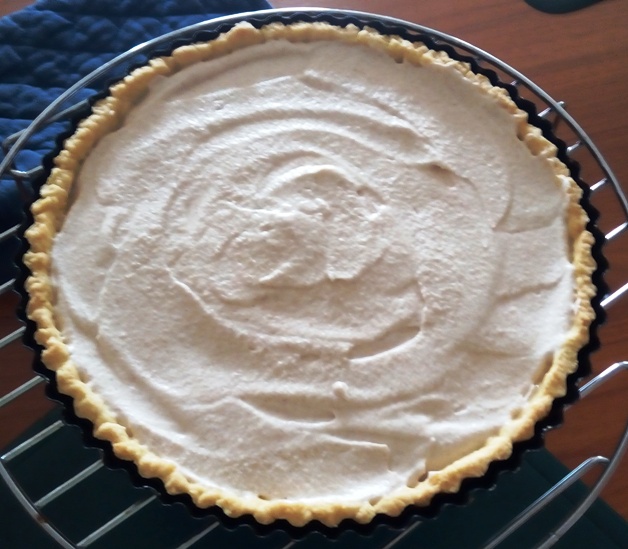
(Recipe available here - all I changed was to cut the amount of whipped cream topping in half, and use sweet potato flour instead of cornstarch. Also, I suggest allowing the tart to sit in the refrigerator overnight before consuming.)

Contrastingly, spaghetti recipes (for that animate skeleton in your life) are not difficult to find, but this one for Tagliatelle al Ragu Bolognese is my favourite.

Overall, this has been a good year for independent artists. Scott Cawthorn's Five Night's at Freddy's survival horror series, which I have been following vicariously through Let's Plays since I am a huge coward, will be getting a film adaptation from Warner Bros. Pictures. I'm ...not sure if I will overcome my fear long enough to watch the film. Or even the trailer. I enjoy horror prose, as embodied by the SCP Foundation, but visual elements are...harder to ignore.

On the subject of prose, I recently came across the satirical works of Saki, which are freely available via Project Gutenberg. The style rather reminds me of Jane Austen's, but with a mostly masculine viewpoint and greater usage of biting social commentary. Saki's heroes are witty and intelligent, contrasting with their dull, greedy, self-centered antagonists, although over-cleverness is not rewarded either.

My recent readings have included Charles Stross's works. I loved the Laundry Series from about a page into the The Concrete Jungle. The protagonist works for "The Laundry", an organisation very much like the SCP Foundation in function and scope, but with a distinctly British flavour to contrast with the Foundation's faintly North American air. The stories read like detective fiction, in which the protagonist has to figure out what new supernatural creature is involved in the latest case and how to defeat the creature, and any humans who might be assisting it. However, the sheer delight of these stories is how the paranormal is described in terms which allows it to fit into the known scientific world. Equoid is particularly wonderful in this regard. (Note that Equoid is mildly unsafe for work, and very much unsafe for sleep if read immediately prior.) The novella's explanation for the appearance and behaviour of a certain mythical being is fleshed out with gradual, creeping horror, small details inexorably building a final, sickening picture. At the tale's conclusion, I felt both ill and enlightened.

Returning to video games, I think A Very Long Rope to the Top of the Sky is another strong contender for the video-games-can-be-art argument. It's a thoughtful game, deconstructing some video game tropes while playing into some others. It's also, frankly, underrated. Perhaps the long title, somewhat subpar graphics and plodding pace put off some players. It is a long game, and it takes a while for its true brilliance to be apparent, but it is very much worth playing until the end.

This was another edited stream-of-consciousness post. It's almost the only type of post I write. Also, I'm not good at closing paragraphs, possibly for the same reason. My mind certainly doesn't stop, not just yet, so how should this prose end?

Tuesday, 29 July 2008

Fiction: Procrastination

Do something.

I place the gumball in my mouth. If it were a jawbreaker this would hurt, but the candy coating dissolves quickly and collapses in on the hollow centre. It is an obnoxious shade of blue.

Experimentally I stick my tongue out at the mirror. Obnoxious shade of blue. I wonder if the previous gumballs were the same, and I simply did not notice.

You’re not doing anything.

I think about the pickles in the fridge. Pickles and salami. Salami slices fried to a crisp are like potato chips, only better.

Please. Time is wasting.

I ignore the voice and chew. Deliberately. I was thinking of something but it escapes my mind.

Pickles…

No, not pickles. Something. I shape the gum with my teeth and blow. The material snaps before it can form a bubble. So much for gum. I move to fold it away, into the tissue in my pocket. To my dismay, it is blue.

I examine my tongue in the mirror again. No blue.

“Ah,” I say. I pop in a yellow gumball and examine the result. Yellow.

Less dismay, then.

Alarm clock.

I glance at it. It stands in the corner of the table, nameless, trustworthy. “No.”

Then do something.

“No,” I say, without thinking.

It’s afternoon.

So it is.

A stirring which is quickly quelled. Do something. Do something NOW!

“I can’t.”

Why?

“Don’t feel like it.”

You will regret this later.

“Maybe.” The gum is losing its sweetness rapidly. I hate gum. It never goes away once it’s done.

Green.

“Green?”

Music.

Obligingly I put on the headphones and glance down the playlist. Piano, I think. The punctuated sounds follow in sharp staccato.

I still find it hard to believe that the piano is a string instrument.

The voice settles to a corner of my mind. I listen briefly to the notes. Already the gum tastes like tepid tea. While kneading out the last of the sugar with my teeth I consider which gumball to take next.

Green.

I shrug. Alright.

The music moves fast, notes following each other as fast as they can without stumbling.

Arpeggio.

“What?”

It’s called “arpeggio”.

“How do you know what I don’t?” The question seizes me, and I wonder if it is possible for me to know more than I do.

There is no reply. I do not have one.

Yellow.

There is no more yellow.

Purple.

I stare at it suspiciously. What flavour-

DosomethingdosomethingdosomethingDOSOMETHINGNOW!

Nerves taken by surprise and twitching in obedience, my hand moves and brings up a document. Something inside gives way, and I begin work.

“I hate you,” I say amicably. There is no response.

Sunday, 26 August 2007

Fiction: The Old Guard

It occurred to me suddenly that I missed them.

It was in the middle of the afternoon with the sunlight coming in and twinkling off the glasses, and the tavern was quiet because no one came in at that time. I was in my corner with a pile of wanted posters on the table and a newspaper for company, and as the old barkeep Jen came around with a white dishcloth he said, “Ain’t seen Tabby in a while. What happen’d ter him?”

He was falling and I thrust out my hand but it missed his by inches and he fell and fell I tried to scream but it was no good and he was smiling, he was smiling, he held up nine fingers and as I stared the darkness swallowed him up I couldn’t save him I couldn’t save him not dear lucky Tabby no –

“I don't know,” I said, and sipped at my coffee.

“I remember how it were like,” mused Jen, absently polishing the tabletop. “It were grand times, it were. Angel an’ Rosemarie, and that there bard chap –”

“Fugue,” I supplied distractedly.

“Aye, that were his name. Good lad, always a-ready with a yarn. Prob’ly a chronicler fer one o’ them grand houses in Pichon now, I shoun’t wonder.”

“Or rotting away in Menksvale Prison,” I muttered under my breath.

“Now wouldn’t that be nice?” Jen rambled on, noticing nothing. “An’ Meerschaum. Har, now that one had a laugh. Did us all good, hearin’ it boomin’ up ter the rafters.”

He went like that too. He was laughing, a horrible sound as he swung his daggers in a deadly crossing arc, the carcasses forming a putrid stockade about him but never strong enough to protect him. They just kept coming and he knew he’d never survive, gruesome purplish blood splattering across his fair skin and his fine clothes, and by the time his own was let we were well out of sight and knew we’d lost him –

“Yes,” I said shortly. “It did.”

“They were good times, lad.” Jen, eyes far away, automatically wiped the ashtray with his towel, sending deep black streaks into the white cloth. He would get it from his wife later for that one. “We were all so happy. An’ now yer’ the onley one still here.”

I saw Angel at the executions the other day. He did not pull down his hood so much as he had in the old days, so I recognised him easily. He still disguised his arbalest in the form of a bulky staff though. His eyes flicked into mine briefly, blue-green and haunted, and then he pulled away with the crowd. I could not even smile at him –

“Yes.”

“An’ we be grateful,” said a new voice. Hanna came from the back, wiping her hands on her apron. “Folks as likes ter forget their heroes, but we never do. Yer’ll always be welcome here.”

“Thank you,” I said, sincerely. I might have been aloof, but I was not incapable of gratitude. Hanna huffed, a little embarrassed, and looked for something familiar. “Jen! What yer be doin’ with me best dishcloth?”

Jen almost dropped the ashtray. “Um...” he fumbled.

I rose, rolling up the posters and tucking them under one arm along with the newspaper. “I have to go.” The barkeep and his wife immediately turned from their impending argument to detain me, but I spoke before they could. “I have something to take care of.”

They understood of course. They were good, sympathetic souls, for all their village roughness. Hanna pressed a warm paper parcel into my hand, and Jen accompanied his insistence that I would always be welcome with a hearty clap on the back. I nodded to them both and stalked off down the street.

It was a good walk up the hill, and the sun was sending golden threads through the trees as I reached my destination. The small white stone was almost overrun with flowering creeper, so much so it was almost invisible, but I found it easily enough. I had always been able to.

I carefully sat down next to it on the grass and stared out, looking over the town and the dying sun beyond it. It was a quiet evening, still and peaceful. Away across the hills, a nightingale began to sing.

Presently I spoke. “I should have listened to you. We all should. I wish... I could tell you that.”

The stone sat unmoving, unable to forgive.

“That’s what you hated, wasn’t it? Not about what you could see. It was that no one else could. You were sighted in the land of the blind, and none of us understood what you meant. Not until the end.”

I leant back into the grass. “You know, I never cared much for the company,” I mused. “Everyone was just there. I thought I could have done without them. I thought I was there from pure courtesy. But then we started to drop away, one by one, and I realised how much more I could have given back then. Back when it wasn’t too late. Back when we were... whole, I suppose.”

The golden rays had now deepened to orange, and they coloured the sky in brilliant streaks. The grass rustled in acknowledgement of the light breeze.

“I miss those days.” I stood up suddenly. “But things must change, or they never will. Goodbye, Rosemarie.” I touched the top of the stone lightly, then turned and walked, away from the town, towards the darkening hills.

As I tread the narrow rocky paths, eating the warm bacon-and-egg pastry Hanna had packed for me, I thought about the days before the change. About the decisions I could never rewrite. They were sombre thoughts, but not discouraging.

“After all,” I contemplated, “Someday I will be old and toothless, or perhaps freezing in some cave somewhere, or alone without hope in a graveyard. And then I will look upon these days as the best in my life.”

The thought made me chuckle.

Fin.

Tuesday, 27 March 2007

Atmosphere

(I'm being positively prolific today, aren't I?)

The sky is yellow, and the trees and buildings are all cast over with the same shade. It's what happens when sunset mixes with heavy cloud cover.

The temperature's around thirty degrees Celsius and the relative humidity is over ninety. It will be a sticky day. And rainy, judging from the sky.

(Today will be like this, and yesterday was like this. It was always the same.)

Rainy mornings. Sweltering afternoons. Humid nights. Temperatures rise and then fall, often within hours. A day you thought would be chilly burns cancer into your skin. Welcome to the tropics.

Wake up in the morning. Clean up. Dress nicely. Five minutes outside and there is soot in your hair. Five minutes walking and perspiration seeps into your clothing. Five minutes more and you no longer notice the nitrogen dioxide.

Go to work or school. Do something, maybe nothing. Cold, dry air-conditioning seals the sweat onto your skin. Conserve energy. Take the lift up one level instead of the stairs, because the stairs are dusty and musty and dark and anything, anything to conserve the chill.

At the end of it all you are dishevelled, your morning's work all undone. The car is a death-trap of warm, stagnant air. The evening air is preferable. Back home through the gritty, sweaty streets.

Smoke wends its way from the satay stalls. Fried fish and quiet chatter, because the blanket of darkness dulls everything. The breeze blows, but it brings warm air, not relief. The houses look even older now, black-streaked from rain and weather.

Home at last, silent and breathless. The kitchen light is a sound, filling the emptiness. Oil on your face, sweat on your arms, mud on your socks, heat filling up your shoes. Soul filled with nothingness. Tomorrow is another day.

Ever wondered what it all means?

Thursday, 22 March 2007

Fiction - rDNA for Laymen

So once my facilitator asked our class to come up with a method to explain the rDNA techniques we learnt, in layman's terms. The obvious course - using an analogy - seemed boring to me and I'd need a lot of analogies to cover everything, so I came up with a story instead. A strange, folktale-type story written with tongue firmly in cheek.

Enjoy.


EEDIUS AND THE DEITY'S BOOK

A long time ago, in the peaceful land of Ca’naan, there was a tree-deity called Pesteratus. He lived in an old oak, up on a tor overlooking a village, but had no objection to appropriating other trees. He was very old, and very bored, and very fond of causing trouble amongst the locals.

It so happened on one occasion that his eye fell upon the shepherd Eedius. This last was an old man, perhaps a little simple-minded as is the way of the country folk, but good hearted and kind. He looked after the sheep all day, and then took them home at night, and tended to every one of them as if they were his own children.

One day Eedius set his sheep out to graze, and sat himself against a tree. He unwrapped his meal – a simple affair of cheese and bread – and was about to partake of it, when he heard a voice.

“Eedius,” it said, “Eedius del Ca’naan!”

The old man turned, and saw a gnarled, wrinkled tree standing by him, where there had certainly been no tree before. Before he could blink, it moved, and Eedius realised it was not a tree.

“Great Spirit of Trees,” he acknowledged respectfully, recognising the deity. “How may one be of service?”

“Well,” said Pesteratus, rather spoiling the effect by suppressing a snigger, “I have a great honour to confer upon you, a – ha! – great honour indeed! I have written –” here he paused dramatically, “a book.”

“Indeed,” said Eedius politely, waiting for the deity to continue.

“Yes, a great book,” said Pesteratus, a little annoyed, “the most important book that shall ever be. And,” suddenly, “I want you to publish it. Seven hundred copies, and greatness shall be yours.”

With that, the spirit disappeared. In his place was a thick stack of paper.

Eedius took up the papers and looked them over. He attempted to read them, but could make no sense of what was said, even though the words were familiar. He decided to think over what the spirit had offered him later.

At evening he put his sheep in the pen again and walked down to the local tavern, stack of papers tucked under his arm. The tavern-keeper was a well-read man, but he could not make sense of the papers, and neither could anyone else at the tavern.

“Nevertheless it would be ill-advised to disobey a tree-spirit,” cautioned the tavern-keeper. “Go to Uuncarya, they have printing offices there. They will help you.”

So the shepherd put his sheep in the care of a neighbour, shouldered his pack and set off towards Uuncarya. It was a small city, but he found it easily enough, and it was not too long before he found himself in the printing office.

“Interesting,” said the manager of the office, looking down his spectacles at the manuscript. “Very interesting. I cannot pretend to understand it, but of course, a tree-spirit is smarter than I. Very well, we will print it, but you must understand you must do the type-setting yourself.”

“Type-setting?” asked Eedius, confused.

“Oh yes. You must set up the type for each page, the number of words and so on, so we have a template to print off on. Jarachaim here will help you.” A sickly-looking youth stepped forward.

So with the aid of the lad, the shepherd set up the type for every single page of the book, inserting little stone pegs with a letter inscribed on each into a page-sized frame. At last there was a type for every single page.

“And now,” said the manager, we may start to print. He took up the stack of types and walked into a giant room, with a machine filling up almost all the available space, ceiling to floor. He put in the types into certain slots, careful to rotate them in the correct direction, and fiddled with the controls. The machine came to life, printing and printing seven hundred copies.

While the machine worked Eedius found himself with some unexpected free time, and wandered around the printing office. At one room, he found a group of youths with slips of paper, flipping through the printed pages and comparing the slips to the pages. To his astonishment, he found that the slips contained the very first and very last sentences of various individual pages.

“Quality control,” said the manager, when asked. “If the first and last sentence is correct, the whole page must have been printed correctly too.” Eedius had to own that it made sense.

At last the pages were printed. But then came another difficulty.

“We lack the facilities to bind the books,” admitted the printing office manager. “Go to Pischon, they will help you there.”

So with a cart full of printed pages, Eedius made the long journey to Pischon. It was a small mercy that it did not rain.

Pischon was a big city, and Eedius was soon in awe of the surroundings. But quickly remembering his task, he headed for the publishing office of the city.

The office manager was willing to help. However, he noted that it would take a long time for the binding process to even begin.

“For,” he said, “we have so many books to print and bind. We will have to finish them before we go on to yours.”

“Well, this book is for a spirit,” said Eedius, and he explained the circumstances behind the book.
“Ah,” said the manager. “That is a very good reason. I will print this book first.”

And he kept to his word. Soon enough, Eedius was on the way home, his cart now filled with seven hundred volumes. The villagers welcomed him when he arrived, and wanted to throw him a party, but he modestly declined. He wanted to complete his quest and get his reward.

Eedius headed up to the tree where he had first met the spirit. “Great Spirit of Trees!” he called. “I have come with your books!”

Pesteratus appeared. “Why, this is very good of you,” he said, privately amused. “Yes, it is quite fine- oh dear, look there is an error over here.” He opened the book to the two-hundred and fifty-sixth page. “This should have been spelt with an “y”, not a “i”.” Eedius, upon comparing the book with the manuscript, was dismayed.

Later that evening he sat in the tavern, depressed that he had managed to overlook a single error. The tavern-keeper attempted to be comforting. “Look here!” he said suddenly. “It is but a single error, is it not? Why not print out “y”s, cut them out and carefully paste them on top of the “i”s?”

“It won’t work,” said Eedius gloomily. “The letter “y” is much wider than the letter “i”. There would be no space to insert it in.”

“Well then replace the whole word! We’ll help, won’t we?” The tavern roared in agreement.

So it happened that some villagers ran off to Uuncarya, and others rifled around for sticky gum and cutting materials. Since the whole village was helping, it did not take long for the erroneous word to be replaced in every single copy.

Again Eedius climbed up to the tree, and called out, “Great Spirit of Trees, I have come with your books!” And again Pesteratus appeared.

“Very good!” he said. “This is really too fine – oh dear! It seems you have missed out an entire chapter! Right after page three-hundred and seven!” And Eedius looked at the manuscript and realised it was true.

You may have realised by now that there had been no such error, and Pesteratus was having some fun. But Eedius thought that he was at fault, and so he went back to the tavern to mope.

“Cheer up!” said the tavern-keeper. “We managed this once, we shall do so again!” The tavern roared in agreement. “Let’s see… Why don’t we print out the necessary pages, cut the book apart and put them in? If we remove the covers first it’ll be easy!” Eedius saw that this plan was good, and so it was done. They sent for the printers and made seven-hundred copies of the extra chapter, and then passed them around the village along with a copy of the book. Each person would take the cover off, cut open the book at the precise chapter page, insert the new pages and then glue back the cover. It was simple, and so it was done quickly.

This time however, Eedius was more cautious, and checked through the each book carefully, comparing it against the master manuscript. As he was looking through one, he stopped in alarm.

“Why,” he said, “this one has the new chapter inserted in the wrong place!”

“So it is,” said the tavern-keeper, “and upside-down too, if I am not mistaken! This is too terrible. I say, wasn’t this copy one of those made by the blacksmith’s lad?”

The blacksmith’s lad was sent for questioning, and as it transpired, it had been late at night when he repaired that particular book, since he had many more volumes to finish and his own work as well. He was not sure if he had made more mistakes.

“Dear me!” said Eedius. “I will have to cut out the chapter and put it after the correct page.”

“I’ll help you check for more errors,” offered the tavern-keeper.

More such insertion mistakes were found, especially after the tavern-keeper hit upon the clever expedient of flipping straight to page three-hundred and seven and checking for the first page of the additional chapter. Evidently, seven hundred volumes were too much to repair even when distributed around an entire village. Still, they worked to resolve the problems, and at last the books were complete.

Eedius, now weary from the strain, walked up to the tree again. “Great Spirit of Trees! I come with your books!”

“And a very good job of it too!” said Pesteratus, making his appearance. And with a swift snap of the fingers, six-hundred and ninety-nine books caught fire.

“Wha- what!” Eedius snatched the last volume to safety.

“Well, they weren’t really needed,” said Pesteratus casually. “But I’ll let you in on a secret. This is the Book of Life. It holds the key to manipulating the souls of the living in any way you want.”

Eedius was dumbfounded. “But – but – that’s impossible.”

“Nonsense. Why, that which makes you alive is a tiny twisted string! Fancy that!” Laughing uproariously, Pesteratus turned to go.

“B – but – wait, Great One! I cannot read the book! How do I use it?”

“Read the book? Why would you want to? Making the book gave you all the answers!” And with a final laugh, Pestaratus disappeared.

And indeed Eedius had the answers, if he could but realise it. But Eedius lived in a simpler time, and perhaps you know more than him.

Fin.


Story notes: Most of the strange things which happen to Eedius are meant to illustrate various rDNA concepts - see if you can figure them out.

With thanks to my father for naming Pesteratus.